
Emergence
CHINESE TEA CULTURE
Germination
Formation
Prosperity
Popularization
Development
The Story Behind Chinese Tea
In ancient times, Shennong accidentally ate various poisonous plants when tasting hundreds of herbs, and all kinds of poisons occurred together. His stomach was twisted like a knife, sweating all over his body, and he passed out under a small tree. After waking up, he felt parched and burning. After struggling to sit up, he went to pick the young shoots and leaves from the branches to quench his thirst and hunger. Unexpectedly, after taking a few mouthfuls, the pain in the abdomen was relieved, and after eating some more, the pain disappeared, the sublingual fluid was produced, and the mouth full of sweetness was refreshed. Shennong was pleasantly surprised and called this magical plant tea.
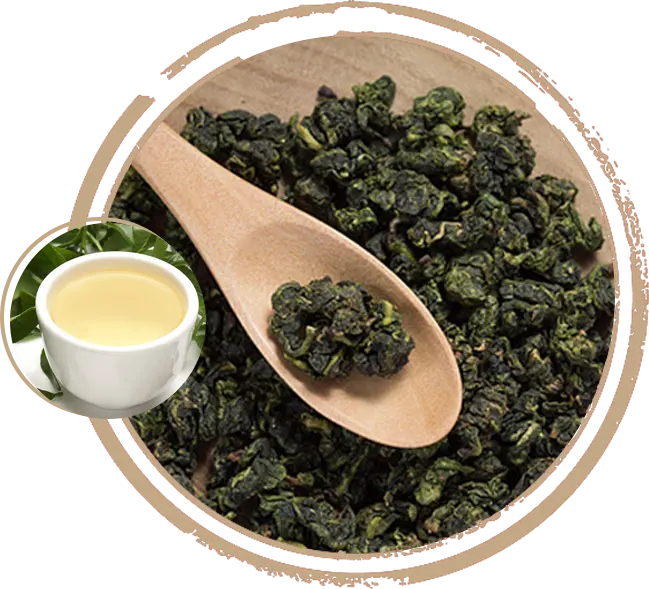
Oolong Tea
"Oolong" means "black dragon" in Chinese. Oolong tea initially grows from a wild tea tree, which is tall and looks like an open parasol. The strange thing is that every time during the tea harvesting season, a thick boa constrictor is often entangled on the tea tree, as if intoxicated on the tree.
Whenever people come to harvest tea, it leaves the tea tree silently. Because of the black and oily colour of the tea leaves of this tea tree, and the legend of the boa constrictor, it is named Oolong tea.
Whenever people come to harvest tea, it leaves the tea tree silently. Because of the black and oily colour of the tea leaves of this tea tree, and the legend of the boa constrictor, it is named Oolong tea.
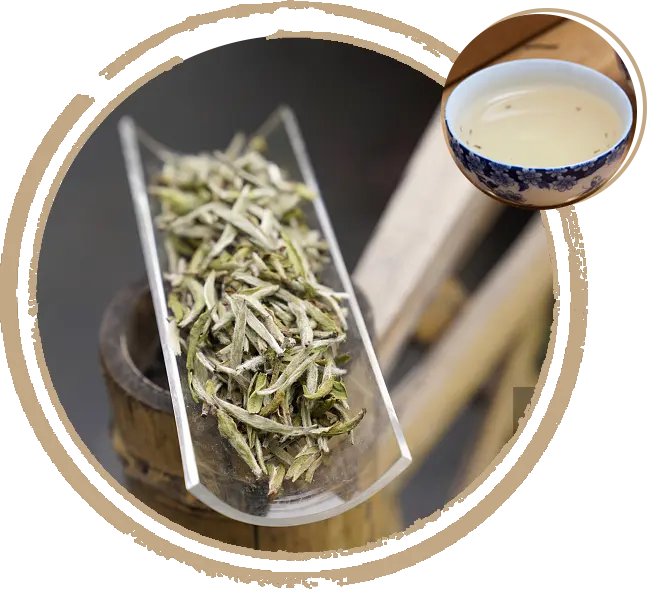
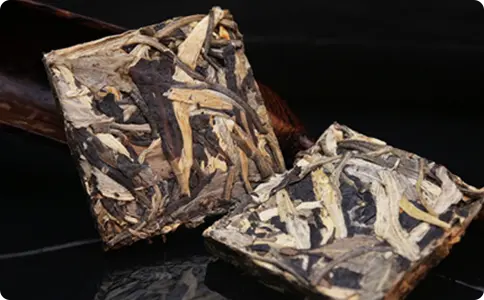
White Tea
During the period of Emperor Yao, a woman named Lan Gu fled to the foot of Taimu Mountain to escape the chaos of war. One year, Taimu Mountain was covered by measles, and the children were killed by the disease one by one. Lan Gu was heartbroken when she saw it. One night, Lan Gu met an immortal in her sleep. The immortal guided Lan Gu to the top of Hongxue Cave to pick the leaves of a kind of white tea which can cure measles after brewing white tea with boiling water. The next day, after getting up, Lan Gu climbed to the top of Hongxue Cave and found a white tea tree. So, she began to process the white tea according to the immortal's instructions, sent it to every villager's home, and finally drove away the "measles" demon.
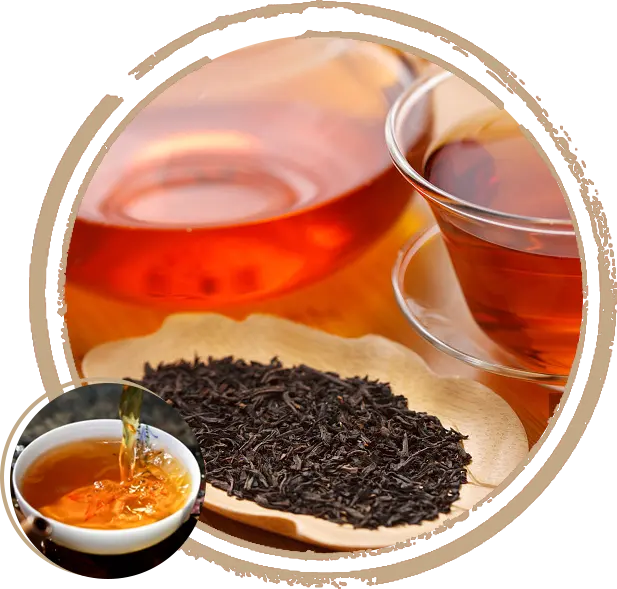
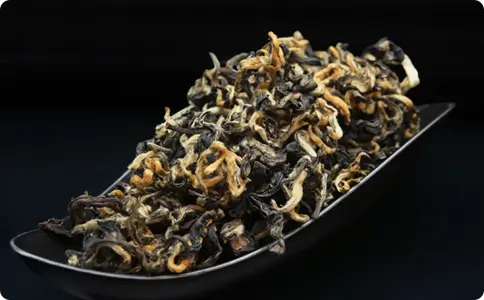
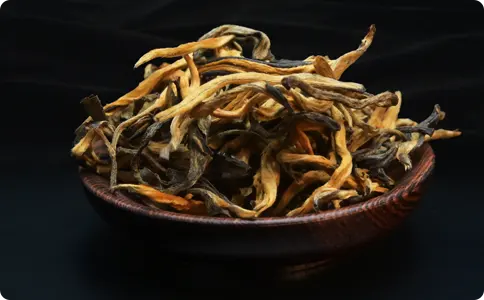
Black Tea
During the war, there was an army stationed in the tea field. During the tea harvesting season, the soldiers saw the fresh leaves all over the ground, so they used the fresh leaves as beds. As a result, when the soldiers left, the tea farmers came back and found that the fresh leaves had been fermented and turned black due to pressure and long-term storage. The tea farmers had no choice but to fry the tea leaves in a pan and then dry them with pine wood. Unexpectedly, the tea with this special smell was well received, and since then, there has been a kind of Lapsang Souchong black tea.
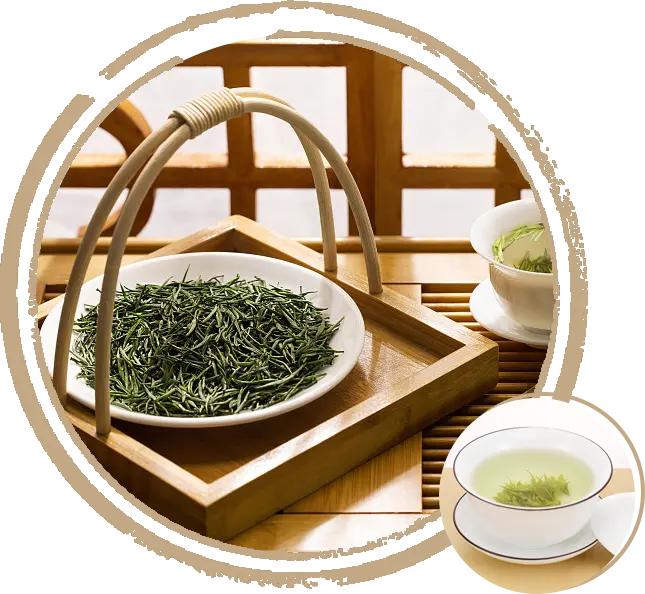
Green Tea
According to legend, green tea was discovered by an ancient Chinese emperor. The emperor was walking in his garden one summer morning when he saw a leaf from a tea tree fall into his cup.
The emperor took a sip of the water soaked in the leaves in the cup, found the taste delicious and refreshing, and introduced it to his subjects, so the drink gradually prospered throughout the country.
The emperor took a sip of the water soaked in the leaves in the cup, found the taste delicious and refreshing, and introduced it to his subjects, so the drink gradually prospered throughout the country.
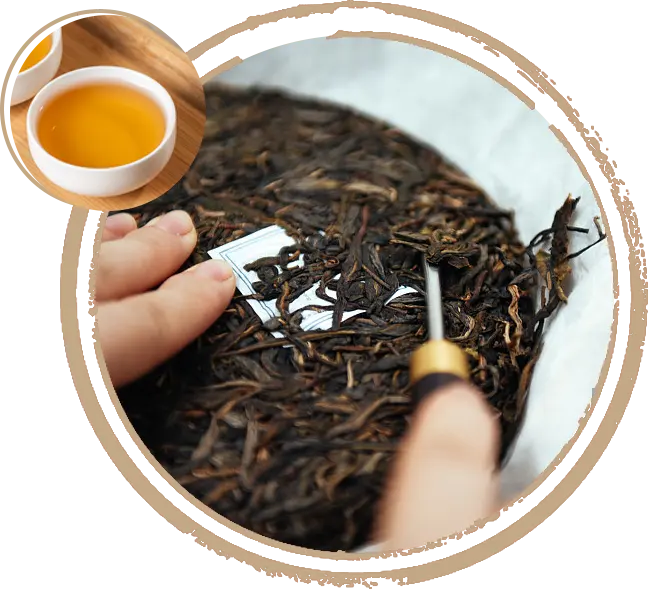
Pu Er Tea
There are many magical and beautiful stories about the origin of Pu'er tea. According to legend, the Zen master Dharma washed away all the dust and concentrated on practicing sincerely to the Buddha. He faced the wall for nine years.
To overcome sleepiness, he tore off his eyelids and threw them out of the house, after which Pu'er tea trees grew. This tea is therefore named Dharma tea.
To overcome sleepiness, he tore off his eyelids and threw them out of the house, after which Pu'er tea trees grew. This tea is therefore named Dharma tea.
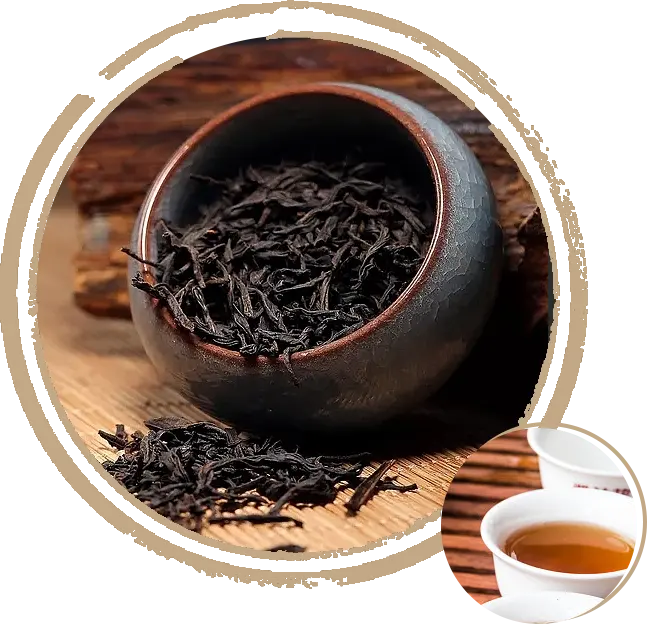
Dark Tea
On the ancient Silk Road, when the caravan transporting tea encountered rain, the tea was all dark and wet. The tea merchants felt very sad, but it was a pity to throw it away. As they walked, they came to a village where dysentery was rampant. Many people died in the village, and the villagers were suffering and helpless.
The tea merchants think that the tea will grow mouldy anyway and that it is worthless, so they should give it to these poor families. As a result, a miracle happened. After drinking the tea brought by the tea merchant, all the people in the village were cured of dysentery.
The tea merchants think that the tea will grow mouldy anyway and that it is worthless, so they should give it to these poor families. As a result, a miracle happened. After drinking the tea brought by the tea merchant, all the people in the village were cured of dysentery.
Chinese Tea Culture in Different Areas
- Tibetans love to drink buttered tea. They will grind the tea leaves into fine powder, pour them into a pot, boil them, and then filter out the tea dregs. Add ghee and salt to the barrel, stir with the tea juice, and finally, put it into the pot and heat it with low heat. Higher-grade buttered tea should also be added with crushed peanuts, walnut kernels, or fried sugar and eggs in advance. Butter tea can be drunk alone or when eating tsampa.
- Cans of tea are a characteristic traditional refreshment diet in some mountainous areas of Gansu. When drinking cans of tea, pour water into the cans and burn them on the stove, and at the same time, roast dates on the side of the stove. Put it in the pot, and wait for the boiled water of the tea to overflow several times. That is, after the taste of dates, longan, and tea enter the water, find a cup, put rock sugar in the cup, and pour the boiled water into it Cup, then add water to the pot, continue to boil, drink while burning, it is best to prepare some food by the stove, eat while drinking, it is a very enjoyable thing.
- Sichuan is one of the earliest regions in my country to grow and drink tea. According to legend, the largest teahouse in China in the old days was in Chengdu, Sichuan, called the 'Huahua Teahouse' at that time. The reason why Chengdu teahouses are loved by people is that Chengdu teahouses have teas, seats, and fun. The so-called 'You Cha' means to satisfy tea drinkers. As the saying goes, 'Tea is not as good as water, and water is not as good as utensils.' People in Chengdu like jasmine tea, but the teahouse owners have a lot of business experience. To satisfy the guests traveling from north to south, they also have other famous teas, making the teahouse always lively.
- The Bai nationality compatriots in Dali, Yunnan, love to drink 'Three Courses of Tea.' It means the tea need to be brewed three times with different ingredients, and the flavour can be summarized as the first bitterness, second sweetness, and third aftertaste. The first tea is bitter. Put the tea leaves in a small pottery pot and roast them over low heat until they are slightly yellow and have a clear fragrance. The second tea is sweet tea, which is brewed with tea buds, walnut kernels, roasted milk fans, rock sugar candied fruit, or honey in boiling water. This tea is sweet, so it is called sweet tea. The third is aftertaste tea, which is made by brewing hot boiling water with young tea leaves, cinnamon powder, pepper, ginger slices, brown sugar, etc. This tea has numbed, spicy, sweet, and bitter tastes, and drinking it makes people aftertaste, so it is called aftertaste tea.
- There is a special custom of drinking the Qin people's Leicha in the Taohuayuan area of Hunan Province. It is to put tea leaves, ginger, and raw rice into a mortar, grind them, and then pour them into boiling water for drinking. A little sesame and salt will make the tea more fragrant. Lei Cha should be drunk while it is hot and slowly to refresh the mind.
- Wuzhou, Guangxi, produces a kind of tea made from the roots, stems, and leaves of old tea trees called Chinese Taxillus tea. It is said that this kind of tea is made by birds holding some fruits in their mouths and stopping to peck on mulberry trees. Some of the seeds stick and fall on the branches or wounds of the camellia and beech families to parasitize and grow by absorbing the nutrients of the trees. People collect the young leaves of this parasite and dry them to make tea, which is Chinese Taxillus tea. Its joints, stems, branches, and leaves can be used as medicine for tea, decoction, and wine.
- Kungfu tea is a traditional tea from the Chaoshan area of Guangdong. Kung fu is very particular about technique. It is best to use small pottery pots and white porcelain teacups for tea sets. The number of cups is poured back and forth to show that the guests are treated equally.
- Among the wedding folk customs in Cangnan County, Wenzhou, there is a long-standing folk custom of 'three sips of tea': It is said that a long time ago, there was a carpenter named Zhang Shun in the East Sea. He once released a red carp. The red carp thanked Zhang Shun for saving his life, turned into a girl, and married Zhang Shun. After marriage, the husband and wife loved each other and lived happily. But the insidious and treacherous Chen Wa sees that the Carp Girl is beautiful and wants to occupy her, doing all kinds of evil. So, one day, Carp Girl couldn't bear it any longer and spit out the three mouthfuls of tea she drank on the ground, turning it into a surging wave, and finally drowned Chen Wa. Miss Carp lived a happy life with Zhang Shun again. Since then, it has become a local custom for the bride to drink three sips of tea before entering the bridal chamber.
- The tea ceremony in Taiwan is a kind of life etiquette with tea as a medium, and it is a way of self-cultivation. It promotes friendship, nourishes the heart, cultivates morality through making, appreciating, and drinking tea, and is in harmony with the oriental philosophy that advocates 'cleanness and tranquillity.' Unlike the tea ceremony in mainland China, which emphasizes tea art and tea-making skills, and the Japanese tea ceremony, which has strict steps in drinking tea, what is formed in Taiwan is a 'tea culture' that is closely integrated with life and the environment. Taiwan's tea-drinking culture focuses on the tea itself, tea-related things, and the creation of an atmosphere for using tea. Appreciating the colour, aroma, and shape of tea leaves is an essential link in Taiwan's tea art.
- Drinking tea is an indispensable part of Hong Kong people's life, among which the most local characteristic is drinking morning tea. After getting up in the morning, go to the teahouse for morning tea before starting a day's work. Famous tea and snacks, two pieces on a plate, solve not only the breakfast but also a wonderful enjoyment. There are many choices of tea, such as black tea and oolong tea, and there are even more types of dim sum. Of course, teahouses are not only open for morning tea. They usually open at 5 a.m. to welcome customers, and they don't close until midnight. Tea drinkers come and go from morning till night.
Our Best Chinese Tea